
Operated by Komodo Luxury
 Satonda Island Travel Guide
Satonda Island: Your Guide to a Unique Crater Lake
Discover Satonda Island, a volcanic island off Sumbawa, known for its saltwater crater lake. Plan your visit with our detailed guide.
Find Your Satonda Adventure
Quick links to help you plan your visit.
For those seeking a unique natural encounter within the Indonesian archipelago, Satonda Island presents a compelling destination. This guide offers a comprehensive overview of what to expect when visiting this intriguing island, from its geological features to practical travel considerations. Satonda Island, operated by Komodo Luxury at satondaisland.com, is a key stop for many exploring the region.
What is Satonda Island? An Overview
Satonda Island is a small volcanic island situated in the Flores Sea, specifically off the northern coast of Sumbawa, within the Moyo Satonda area of West Nusa Tenggara (NTB), Indonesia. Its primary attraction is a saltwater crater lake, a geological rarity that draws visitors from across the globe. The island is commonly included in liveaboard itineraries that traverse between Lombok, Komodo, Flores, and Sumbawa, serving as a tranquil boat stop. What is Satonda Island, at its core, is a natural sanctuary defined by its unusual lake. The route from the landing beach to the lake itself is short but can be challenging, involving an uphill walk over rough, hot, and potentially slippery terrain. Proper footwear with reliable grip is essential for this ascent. The administrative context of Satonda Island associates it with the Moyo Satonda protected area/national-park complex, though the exact current designation and managing authority should be confirmed locally upon arrival or through your operator.
Planning Your Visit to Satonda Island
Planning a trip to Satonda Island involves understanding its remote nature and limited infrastructure. The most practical option for access is to join a multi-day liveaboard or phinisi itinerary that operates between Lombok, Komodo, Flores, and Sumbawa. Satonda is frequently visited as a scheduled stop on such voyages. Independent access is also possible by chartering a boat from the north coast of Sumbawa. Wetlands International identifies Nangamiro as the closest town, approximately 5–8 km from Satonda, from where the island can be reached by a chartered boat. Sumbawa Besar, with its Sultan Muhammad Kaharuddin III Airport (SWQ/WADS), serves as a potential air gateway, followed by road transport and a locally arranged boat. It is crucial not to assume a Moyo crossing automatically reaches Satonda, as they are separate islands with distinct landing arrangements. Always confirm the exact destination, departure point, landing beach, return time, and weather cancellation policy before setting out. For detailed planning, consider exploring our guide on how to get to Satonda Island.
Navigating Access Rules, Permits, and Fees
Understanding the access rules, permits, and fees for Satonda Island requires local confirmation, as information can be inconsistent. Satonda is described in tourism and conservation sources as protected, but the precise current legal category, zoning, and controlling office are not always consistently documented. It is advisable to confirm locally with the relevant BKSDA/park office, village authority, or your boat operator. There is no reliably verified current Satonda entrance fee in available sources; do not publish a price without confirmation. While some secondary sources provide approximate Moyo Satonda park rates (e.g., Rp50,000 weekdays/Rp75,000 weekends and holidays for Indonesian citizens, and Rp250,000/Rp275,000 for foreign visitors), these are not verified here as an official Satonda tariff and should not be treated as current. Boat, guide, landing, conservation, and park charges may be separate, so always ask for an itemized receipt or written breakdown. The swimming rule for the crater lake is also inconsistent; treat swimming as not permitted unless the local manager explicitly confirms it. For more details on the lake itself, refer to our Satonda Crater Lake guide.
Choosing the Best Season for Your Visit
The best season for visiting Satonda Island generally aligns with the drier, calmer part of the Lesser Sunda travel season. This period usually offers better conditions for boat access, clearer visibility, and a more comfortable experience for the crater walk. However, exact conditions can vary from year to year, so relying solely on calendar dates is not advisable. Sea conditions can lead to cancelled landings even during the nominal dry season. It is crucial to check local marine forecasts and respect the operator’s go/no-go decision. Can you visit Satonda Island during rainy season? While possible, the wet season brings increased risks. Rain, swell, wind, slippery trails, and difficult beach landings can make a short visit unsafe or impractical. Always confirm locally with your operator or a relevant authority before planning travel during this time to ensure the island is open to tourists and conditions are suitable.
Exploring Satonda’s Unique Wildlife and Marine Environment
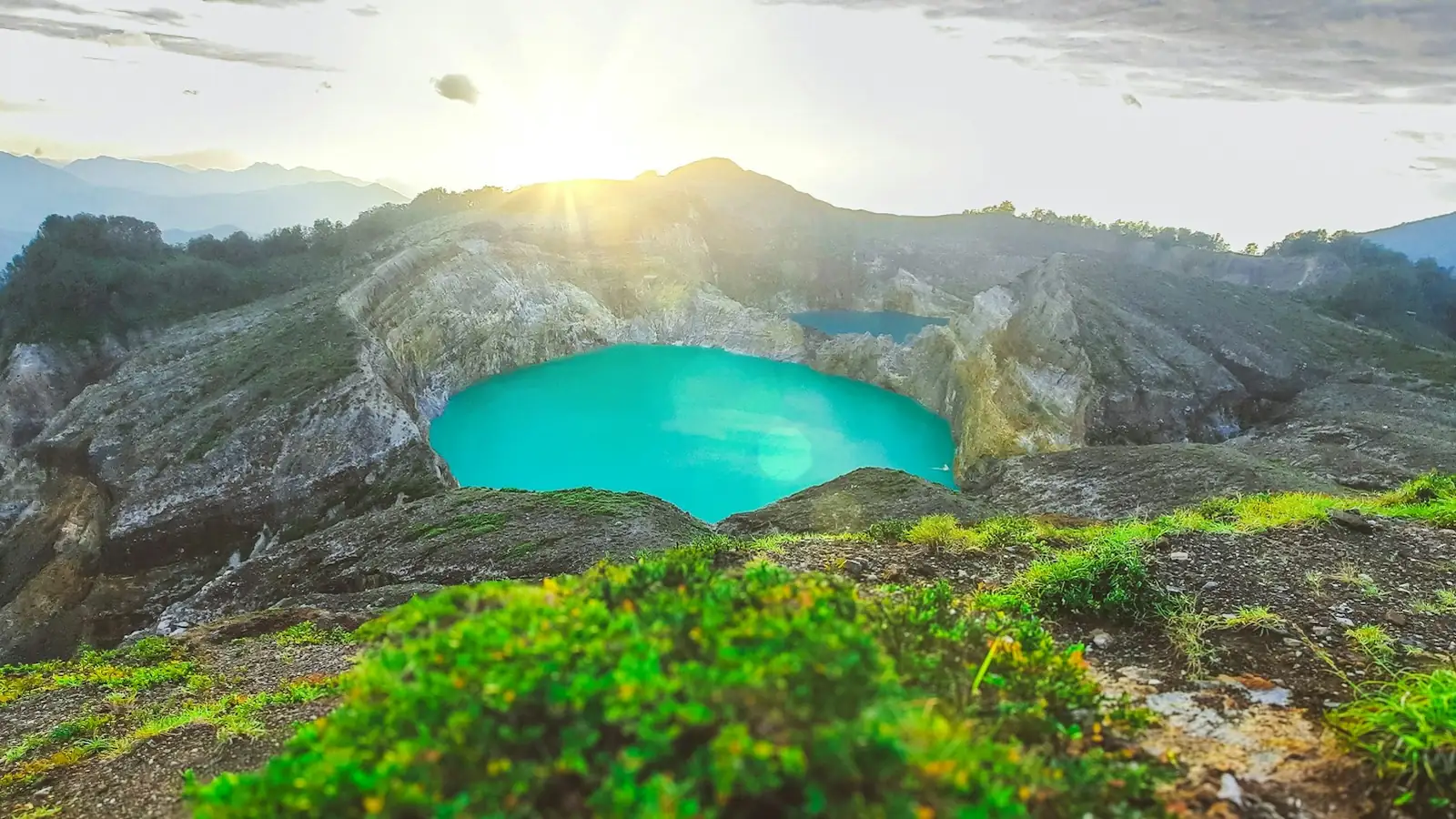
Satonda’s principal natural feature is its saltwater crater lake, a rare volcanic lake environment conceptually and chemically connected to the surrounding sea. This unique ecosystem is central to why travelers visit Satonda Island. The surrounding area is associated with coral reefs and marine habitats, attracting snorkeling and diving boats, though specific verified species lists or reef statistics for Satonda itself are not consistently available. It is important not to claim particular turtles, sharks, whales, birds, or endemic species as regular Satonda sightings without a local biological source. Nearby Moyo Island is known for its reefs and freshwater waterfalls, but its wildlife should not automatically be attributed to Satonda, as each island maintains its distinct ecological profile. The question, “is Satonda crater lake freshwater or saltwater?” is answered by its marine influence, making it a saltwater lake, a key aspect of its unusual nature.
Prioritising Safety During Your Satonda Island Trip
Safety is a primary consideration for any visit to Satonda Island. Boat transfers are dependent on swell, wind, tides, and beach conditions; always use a reputable vessel equipped with life jackets and do not attempt a landing in rough surf. The island has limited infrastructure and shade, so heat and dehydration are risks. Carry sufficient drinking water. The trail to the crater lake involves uneven volcanic ground, loose material, roots, and steep sections, making reliable footwear essential. Can you swim in Satonda Island lake? Do not enter the lake unless local authorities explicitly permit it, as its salinity and water quality are not consistently verified in available sources. Medical access on Satonda is non-existent, so carry personal medication and treat the visit as remote travel. Mobile coverage and emergency response capabilities should be confirmed locally before departure. Avoid handling animals, disturbing nests, or consuming unverified fruits or plants. For those wondering, “is Satonda Island open to tourists?”, it generally is, but always confirm local conditions.
Understanding What Has Changed or Remains Unclear
Information regarding Satonda Island can be inconsistent, making local verification crucial. Satonda continues to be marketed primarily as a boat-access stop, rather than a destination with established land-based tourism infrastructure. Online information often differs regarding swimming rules, park designations, access gateways, and fee figures. Some published pages may contain future-dated or secondary information, which should not be relied upon as proof of official current prices or regulations. There is no reliably verified recent change, such as a new jetty, visitor center, closure, official tariff revision, or newly published permit system, that can be established from available results. Before your visit, it is essential to confirm locally the current park authority, entrance and conservation fees, swimming status, permitted landing beach, boat departure point, communications coverage, and any temporary closures. This proactive approach ensures an informed and smooth trip to Satonda.
Logistics for Your Satonda Island Expedition
A typical visit to Satonda Island usually lasts about a half-day, often as a stop from a liveaboard, resort, or private island-hopping charter. Allow roughly 3–6 hours on the island, including landing, the crater-lake walk, and the return boat. Longer itineraries may incorporate Satonda into a 2–4-day Sumbawa excursion or as part of a 7–10-day Bali–Komodo liveaboard voyage. Boat travel from Moyo Island to Satonda commonly takes about 40 minutes on organised itineraries. From the Sumbawa mainland, access points include Nangamiro and the Sanggar-area coast, with a local motorised outrigger from Nangamiro reportedly taking about 1 hour. From Sumbawa Besar, expect road travel to a north-coast departure point, followed by a chartered boat. It is a common mistake to confuse Moyo and Satonda; a Moyo itinerary does not automatically include Satonda. For more detailed insights into tour options, explore our Satonda Island tours page, and for boat charter specifics, visit our Satonda Island boat charter section.
Exploring the Satonda Crater Lake
The Satonda Crater Lake is the defining feature of the island and is a key reason why travelers visit Satonda Island. What is the shape of Satonda crater lake? It occupies the island’s volcanic crater, forming a roughly circular basin. Why is Satonda crater lake considered unusual? Its most distinctive characteristic is its saltwater composition, which is commonly described as having formed when seawater entered the crater after the 1815 Mount Tambora eruption. This marine influence makes it a rare example of a volcanic lake with high salinity, differentiating it from typical freshwater crater lakes. A Wetlands International site profile gives the lake size as approximately 62 hectares, but this figure should be confirmed locally. Can you walk around Satonda crater lake? The route from the beach to the lake is short but can be steep, rough, hot, and slippery, requiring shoes with reliable grip. Can you kayak on Satonda crater lake? This activity is generally not permitted unless explicitly confirmed by local management, given the lake’s unique and protected status.
Camping and Overnight Stays on Satonda Island
Can you camp on Satonda Island? And can you stay overnight on Satonda Island? Satonda Island has very limited infrastructure, and there is no established tourist accommodation or formal camping ground. Most visits are conducted as day trips or as a stop on a multi-day liveaboard itinerary, where overnight stays are on the boat itself. While it might be theoretically possible to camp with prior local permission and comprehensive self-sufficiency, this is not a standard or recommended option for general tourists. The island lacks facilities such as fresh water, sanitation, and reliable communication, making independent overnight stays challenging and potentially unsafe. Any consideration of camping would require explicit permission from local authorities or the managing park office, alongside meticulous planning for all supplies, waste management, and emergency provisions. For a comfortable overnight experience, a liveaboard vessel in the surrounding waters remains the most practical and common choice.
For a truly informed and well-prepared visit to Satonda Island, Komodo Luxury is here to assist. Our Komodo Luxury reservations team can confirm current access rules, fees, and the best travel options for your desired itinerary. We encourage you to reach out directly with any questions about boat types, safety equipment, or specific inclusions for your journey. Enquiries and bookings are handled directly by our team on WhatsApp +62 811-3823-875 and sales@komodoluxury.com. Contact us today to plan your Satonda Island adventure.
Wetlands International Site Profile
International Parks Moyo Satonda Information
GeoKepo Moyo Island Guide